
Cycling as a family is one of the most rewarding outdoor activities you can share with your children. It promotes physical fitness, encourages independence, and creates lasting memories. However, taking young riders onto public paths or neighborhood streets introduces unique safety considerations. Because children lack the developed peripheral vision, spatial judgment, and hazard awareness of adults, establishing strict safety protocols is essential.
Whether your children are riding balance bikes, progressing to pedal bikes, or navigating suburban neighborhood streets, this comprehensive guide covers essential protective gear, pre-ride inspection checklists, safe route planning, and vital road etiquette.
1. Proper Protective Gear: Beyond the Basic Helmet
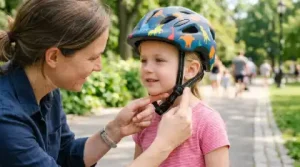
Wearing a helmet is the single most effective way to prevent serious head injuries during a cycling accident. However, gear safety involves more than just putting on a helmet—it requires selecting certified protection and ensuring proper fit.
The “Eyes, Ears, Mouth” Helmet Fit Test
A helmet that is too loose or worn tilted back exposes the forehead and fails to protect the head during an impact. Every family member should pass the 3-step fit check before clipping in:
- Eyes Check: Position the helmet level on the head. Looking upward, the front rim should sit no more than one to two finger-widths above the eyebrows.
- Ears Check: Adjust the side straps so they form a tight “V” shape directly under each earlobe when buckled.
- Mouth Check: Buckle the chin strap snugly. Have your child open their mouth wide; the helmet should pull down firmly on top of their head without pinching.
Always ensure helmets carry official certification, such as CPSC (Consumer Product Safety Commission) compliance in the United States. Look for modern helmets equipped with rotational impact protection systems (like MIPS) for enhanced safety.
Visibility & Apparel Essentials
Children should wear bright, high-visibility clothing or reflective vests, even during daytime rides. Always mandate closed-toe shoes (like sneakers); open-toed sandals or flip-flops offer zero grip and pose severe injury risks near pedals and spokes. Additionally, tuck in loose shoelaces and avoid wide-legged pants that could get caught in the bike chain.
2. The Pre-Ride “ABC Quick Check”
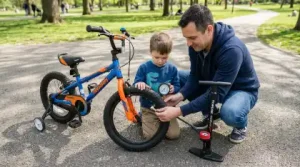
Teaching children to perform a basic mechanical check builds responsibility and prevents sudden equipment failures while riding. Run through the ABC Quick Check before every ride:
- A is for Air: Squeeze the tire sidewalls. Ensure tires are inflated to the recommended PSI listed on the sidewall, and check for worn treads or cracks.
- B is for Brakes: Squeeze hand brake levers to verify they hold firm before touching the handlebars. For coaster (foot) brakes, ensure the pedals engage quickly when pushed backward.
- C is for Chain and Crank: Ensure the chain is clean, lubricated, and running smoothly without excess slack or rust. Spin the pedals backward to check for binding.
3. Planning Safe, Low-Stress Family Routes
The key to an enjoyable family ride is selecting terrain that matches the skill level of your least experienced rider.
Prioritize Separated Infrastructure
Whenever possible, choose car-free greenways, paved rail-trails, or dedicated multi-use paths. Separated infrastructure removes the danger of motor vehicle traffic, allowing young cyclists to focus on steering, braking, and maintaining balance without driver distractions.
Navigating Neighborhood Streets Safely
When riding on public streets, stick to quiet residential roads with low speed limits and minimal parked cars. Children under age 10 generally lack the developmental perception needed to gauge the speed and distance of approaching motor vehicles, so keeping them on sidewalks or protected paths away from main roads is strongly recommended.
4. Core Road Rules & Defensive Skills for Kids
Before taking children off isolated bike paths, ensure they understand basic traffic safety principles:
Ride Predictably and in Single File
Teach kids to always ride in a straight, predictable line on the right side of the path or road, traveling in the same direction as traffic flow. When riding in a group, position an adult at the front to navigate and set the pace, and another adult at the rear (“sweeper”) to monitor the children. Kids should always ride in single file when motor vehicles or other cyclists are nearby.
Communication and Hand Signals
Teach children basic hand signals for left turns, right turns, and stops. Encourage them to use a bell or verbally call out (“Passing on your left!”) when approaching pedestrians or slower cyclists on shared multi-use trails.
Driveway and Intersection Caution
A significant portion of youth cycling accidents occur when children pull out of driveways or crosswalks without stopping. Instill a strict rule: kids must come to a complete stop, dismount, and look left, right, and left again before entering any road or crossing a driveway intersection.
Summary
Family biking is an incredible way to build healthy habits and enjoy the outdoors together. By investing in properly fitted safety gear, conducting routine equipment checks, picking low-risk routes, and teaching clear traffic rules, you ensure every family ride remains safe, smooth, and fun for everyone.